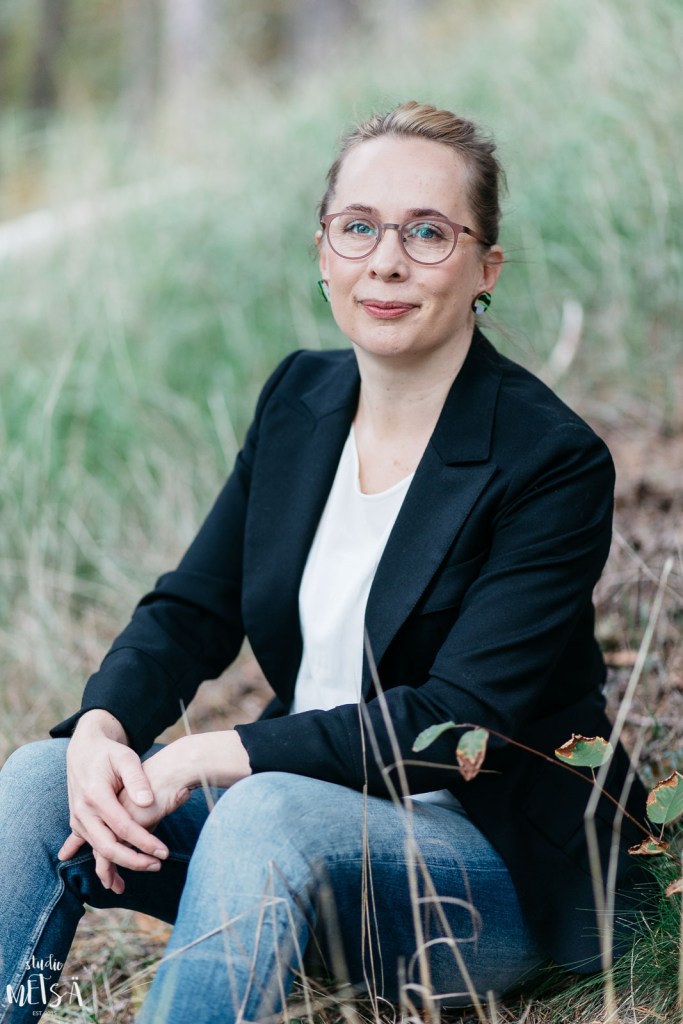
I work as Professor of Sociology and Science and Technology Studies (STS) at Tampere University. I am Director of Tampere Centre for Science, Technology and Innovation Studies (TaSTI).
My research is situated at the intersection of sociology and feminist science and technology studies, with a specific focus on biopolitics, knowledge production, embodiment, materiality and speculative futures. I am particularly interested in the scientific governing of life and what forms of inclusion and exclusion the changes entail. I have explored these questions by focusing on knowledge production in genetics, reproductive medicine and stem cell science on reproduction and ageing, and technologies of reproduction, in particular infertility treatment (IVF), prenatal testing, and abortion. Together with colleagues, I have worked on the processuality of ‘sex’ in biomedicine, animal experimentation and alternative research methods, and populations, ecological sustainability and speculative futures.
I currently lead the research project POPULUS – Populations and reproduction in situated Anthropocene realities: A study on the scientific governing of life forms across the Nordic region, funded by the Research Council of Finland (2026-2030). More information on the project here and on Instagram @populus_anthropocenerealities.
My previous co-led projects include Reproductive Futures that organised several scientific and public events on fertility decline, family futures and ecological disruption. Together with colleagues from University of Cambridge, we produced the interview series Fertility Futures, on feminist methodology in fertility research. I am also co-founder of the Finnish Reproductive Studies Network (FiReSNet).
I teach and supervise theses on the topics of biomedicine, biotechnologies, and knowledge production; reproduction, ageing, and assisting technologies; gender, body and materialities; text analysis and multisited ethnography.
Books
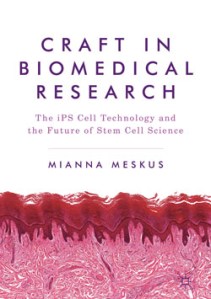
In this important book, Mianna Meskus draws on her extensive fieldwork to portray a rapidly evolving world of human pluripotent stem cell science characterized simultaneously by instrumentality, care, and craftwork. With considerable implications for how we understand the technologization of biology more generally, Meskus shows that as stem cells are becoming a highly versatile biological research tool, working with them continues to require demanding embodied skills and judgment, and dense political and affective engagement; the former is not dependent upon outgrowing the latter.
– Charis Thompson, Professor of Gender and Women’s Studies, University of California at Berkeley and Associate Director of Center for Science, Technology, Medicine and Society at UC Berkeley.
In this illuminating study of the iPS cell line, Mianna Meskus draws attention to the ‘craftwork’ at the heart of the laboratory. Her study shows just how unpredictable the pathway from the lab to the clinic to the market can be and how only a highly artisanal craftwork is able to bridge this gap. This is an invaluable contribution to the field of science studies and new materialisms.
– Melinda Cooper, Associate Professor in the School of Social and Political Sciences at the University of Sydney.
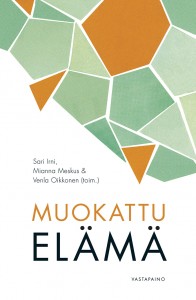
The book Muokattu elämä (Moulded Life) brings together the work of front line Finnish feminist science and technology scholars on phenomena such as genetic testing, IVF, food production, hormone treatment and AIDS activism. The book translates and develops feminist theorization on technoscience, gender and materiality for the Finnish academic audiences. Co-edited with Kuura Irni and Venla Oikkonen.
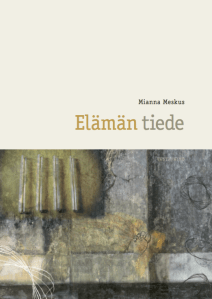
The book Elämän tiede (Science of Life) discusses medical government of human heredity with specific focus on the history of clinical genetics in Finland, the development of prenatal screening technologies, and their implications for the female body and parenthood. The book has been awarded by the Finnish Academy of Science and Letters, and the Finnish Researcher Network on Qualitative Health Studies (LATE).

